Starting Solids
Starting solids is a big milestone, and it is one that comes with lots of opinions. Our answer? Developmental readiness matters more than an exact age. Unfortuantely for your 4 month old, they probably aren’t showing those signs yet!
Starting solids is a big milestone, and it is one that comes with lots of opinions. Here’s our take: Developmental readiness matters more than their exact age butttt your four month old probably isn’t ready (yes, even if their doctor “clears them”).
It’s About Readiness
You will often hear that babies should start solids at 6 months, and for many babies, that is exactly right. Most infants show the skills they need to safely and happily eat solids around that time.
But babies are individuals. Some are ready a little earlier, sometimes as early as 5 months, while others need a bit more time. The best approach is to watch your baby to decide.
The Key Signs Your Baby Is Ready for Solids
Before offering solids, your baby should show several developmental readiness signs. These signs tell us that their body and feeding skills are prepared, not just their age.
Here is what to look for:
1. Sitting Upright With Minimal Support
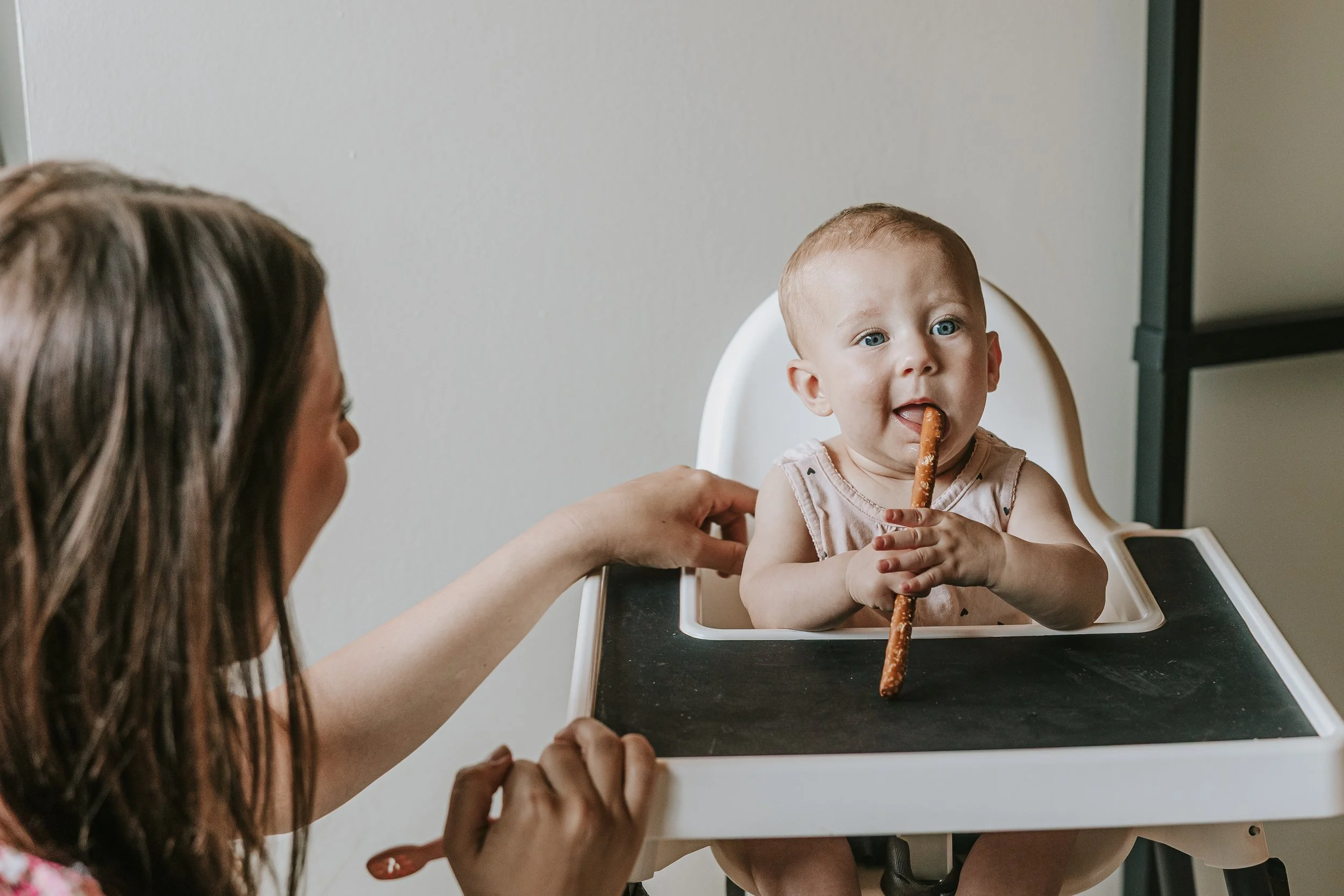
Your baby should be able to sit happily upright in their high chair for about 5 to 10 minutes without slumping. They do not need to sit completely independently on the floor yet. What matters is that they can maintain a stable, upright position during meals.
2. Good Head and Trunk Control
Strong head and trunk control are essential for safe swallowing. Your baby should be able to hold their head steady and keep their body upright while seated, even if they still need some support from the chair.
3. Bringing Objects to Their Mouth
If your baby picks utensils up off the tray and brings them to their mouth, that is a big readiness sign. This shows hand to mouth coordination and curiosity, both of which are important for learning to eat.
4. Opening Their Mouth for a Spoon
When you bring a spoon almost all the way to your baby’s mouth and they open their mouth or lean forward, they are showing active interest and readiness to participate in feeding.
What Your Baby Does Not Need to Do
There are a few common myths that can cause unnecessary stress:
Your baby does not need teeth
Your baby does not need to sit fully independently on the floor
Your baby does not need to be exactly 6 months old
If the readiness signs are there, these things are not required.
Why Readiness Matters More Than Age
Starting solids before a baby is developmentally ready can lead to frustration at mealtimes and may affect feeding safety. Waiting for readiness supports safer swallowing, more positive early food experiences, and stronger self feeding skills over time.
When babies are ready, solids become an exploration instead of a struggle.
Trust the Skills, Not the Calendar
If your baby is around 6 months and showing these signs, that is great. If they are closer to 5 months and clearly meeting them, that can be appropriate too. And if they need a little more time, that is completely normal.
Every baby develops at their own pace. By focusing on developmental readiness instead of a strict age, you are setting your baby up for a safer, more confident start to solids and a more enjoyable experience for both of you.